
Field Guides / Invasive Plant ID
New Hampshire Field Guide
The Four Worst Invasive Plants in Your Yard
How to identify, remove, and replace Japanese barberry, burning bush, garlic mustard, and Japanese knotweed: the invasive plants most commonly found in New Hampshire yards, wood edges, and old hedge rows.
Read this first: New Hampshire law
All four plants here are on New Hampshire's Prohibited Invasive Species list. Under state law it is illegal to collect, transport, sell, distribute, propagate, or transplant any living or viable portion, including all cultivars and hybrids.
Removing plants you already have is not required by law, but it is strongly recommended: each of these escapes yards and damages forests and wetlands. How you dispose of them matters just as much as how you remove them, so follow the disposal notes under each species.
Japanese Barberry
Berberis thunbergii · Barberry family
.jpg)
.jpg)


How to identify it
Leaves
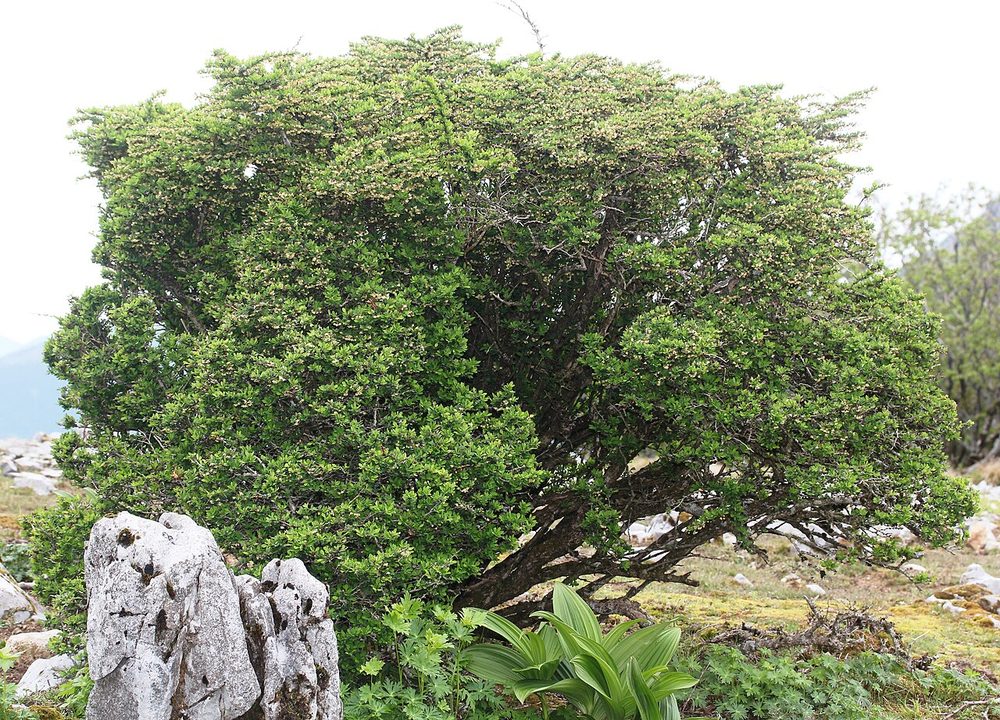
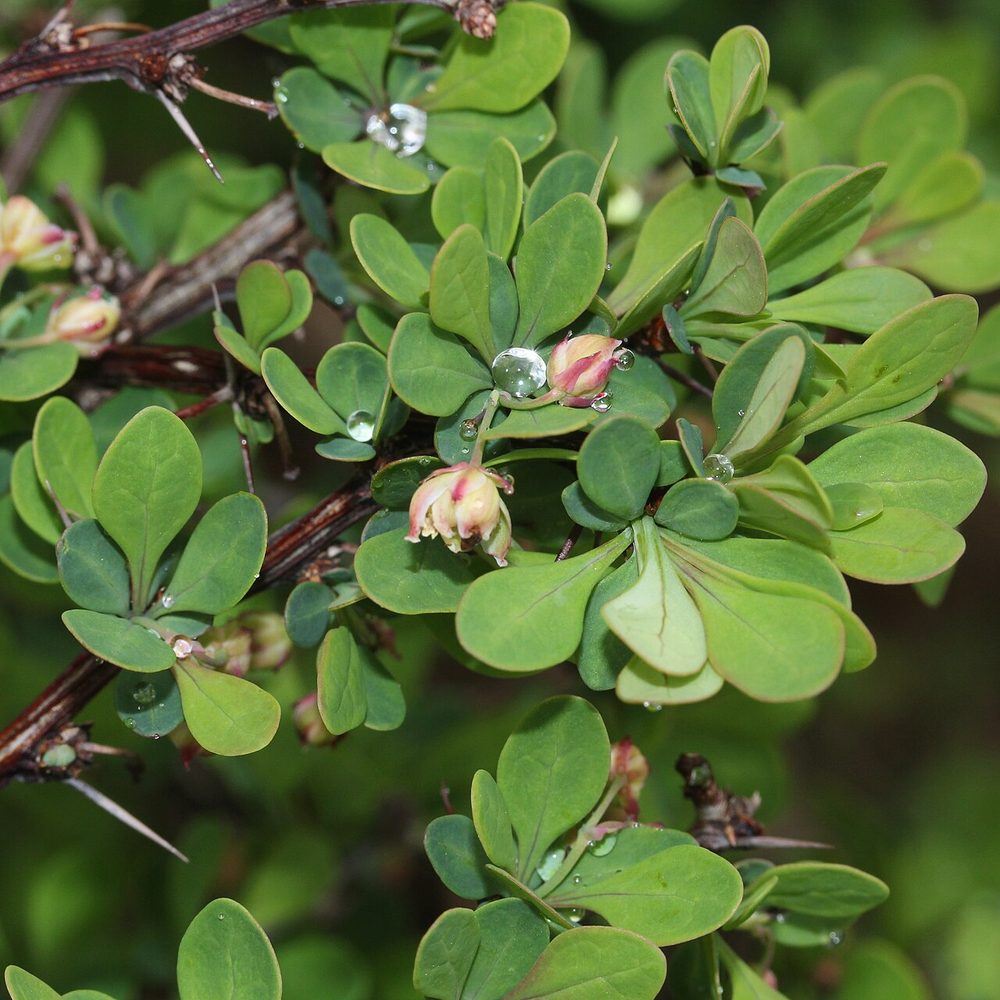
Small, simple, oval to spoon-shaped leaves, half an inch to an inch and a half long, with smooth edges. They grow alternate but are clustered in tight bunches above each spine, so they can look almost whorled. Color ranges from green to blue-green; many escaped plants keep the dark reddish-purple foliage of their cultivated parents. Barberry is one of the earliest shrubs to leaf out in spring, a key early-season clue, and turns orange to red in fall.
Stems and bark
A single sharp spine sits at each node where the leaves meet the stem: the most reliable field mark. Branches are arching and spiny, brown, and deeply grooved. Scrape a root or shoot and the inner bark is a distinctive yellow, unique among common yard shrubs.
Fruit and roots
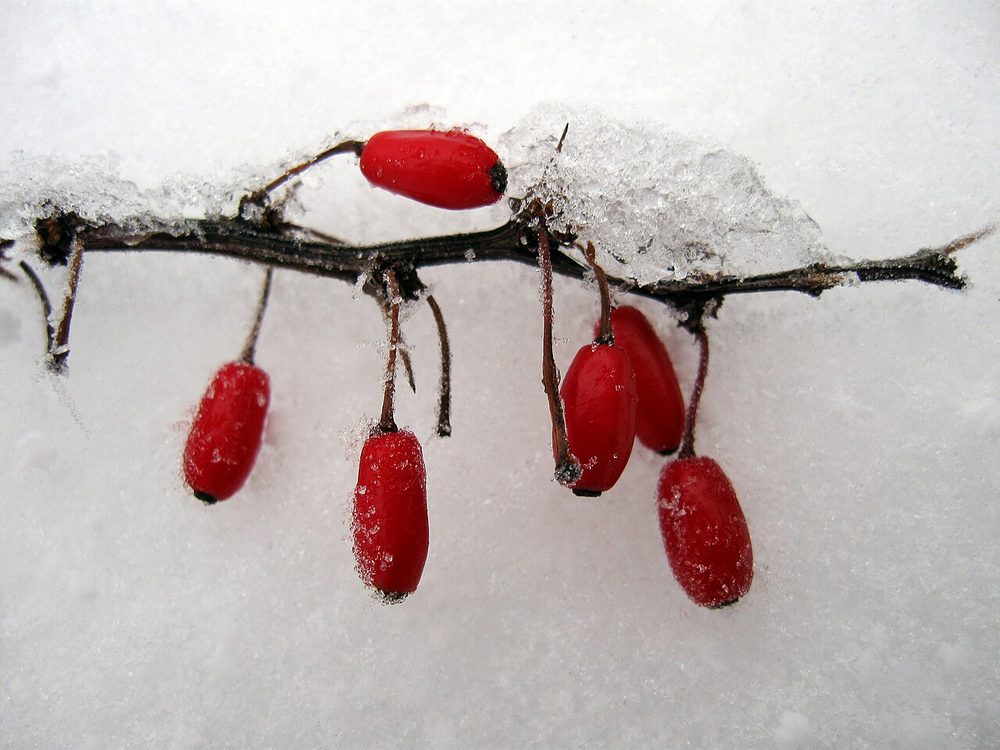
Bright red, glossy, egg-shaped berries mature July through October and persist through winter into early spring. The root system is shallow and fibrous, so small plants pull easily in damp soil, but any root fragment left behind will resprout.
Through the year
- Early spring
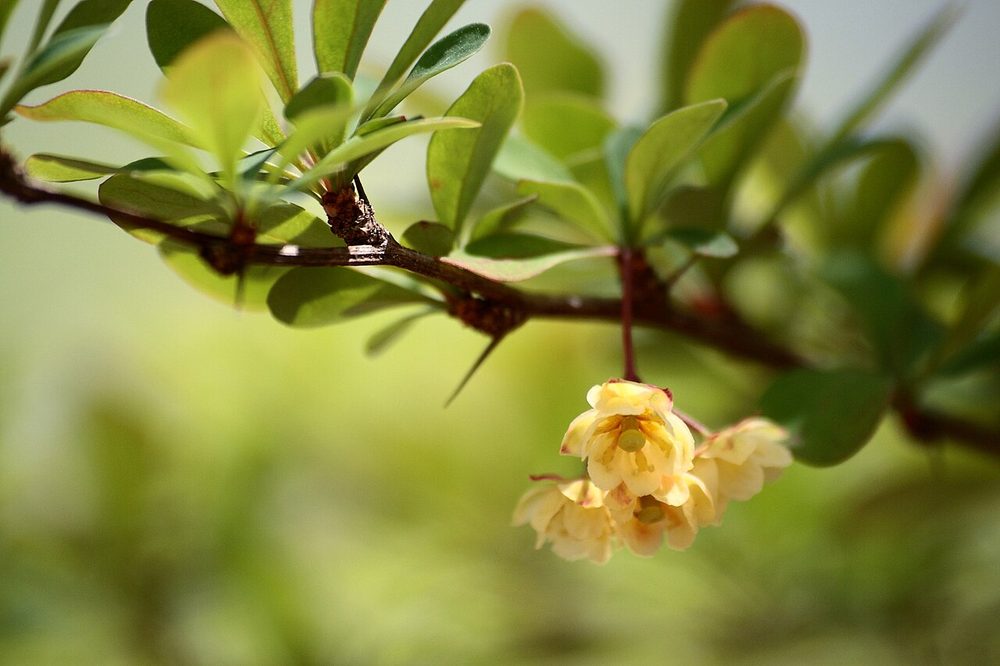
- Leafs out before most native shrubs: bright green or purple tufts on arching thorny stems; pale yellow flowers.
- Late spring
- Flowers finish; dense foliage fills in.
- Summer
- Full dense canopy; berries turn from green to red.
- Fall
- Leaves turn orange and red; red berries brighten and persist.
- Winter
- Bare arching thorny stems studded with red berries: easiest season to spot and map infestations.
Don't confuse it with: native winterberry
Both winterberry (Ilex verticillata, native) and barberry carry red berries into winter and tolerate shade, but the differences are obvious once you check for thorns and leaves.
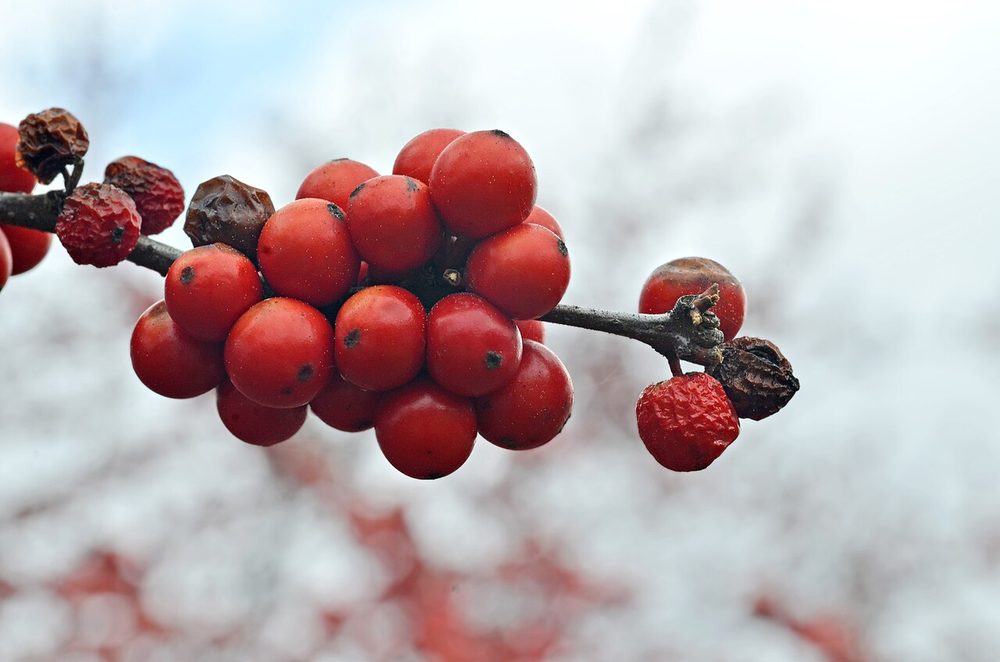

| Feature | Japanese barberry | Winterberry (native) |
|---|---|---|
| Thorns | Single sharp spine at each node | None |
| Leaves | Small oval, smooth edge, clustered above spines | Larger, elliptic, toothed edge |
| Berries | Red, egg-shaped, along the stem | Bright red, round, in leaf axils |
| Stems | Arching, grooved, yellow inner bark | Upright gray-brown, no yellow inner bark |
| Habitat | Forest understory, fields, roadsides | Wetland edges, swamp margins, moist soils |
Removing it
- Time it right: remove in early spring when barberry has leafed out but natives haven't; stands are easy to see and to tell apart.
- Gear up: thick leather gloves and long sleeves. The spines are sharp.
- Small plants (under ~3 ft): hand-pull when soil is damp and loose; the shallow root comes out whole.
- Larger plants: dig with a spade or weed wrench, getting the entire root crown. Any piece left behind resprouts.
- If it has berries: bag all fruiting material. Do not leave berries on site or compost them; bird spread is the number-one vector.
- Monitor the site each spring for 3 to 5 years; the seed bank keeps producing seedlings.
- Worth knowing: dense barberry thickets raise ground-level humidity and are associated with sharply higher blacklegged tick and Lyme-disease rates in NH forests.
Plant these instead
Replace barberry's compact mounded form, purple foliage, or red berries with:
| Native alternative | Replaces | Notes |
|---|---|---|
| Atlantic ninebark (Physocarpus opulifolius) | Upright form, purple foliage | Hardy to zone 3; purple-leaved cultivars; exfoliating bark; pollinator-friendly |
| Winterberry (Ilex verticillata) | Red berries, winter interest | Native holly; needs a male pollinator for berries; moist soils |
| Red chokeberry (Aronia arbutifolia) | Red fall color, berries | 'Brilliantissima' rivals burning bush for color |
| Lowbush blueberry (Vaccinium angustifolium) | Low groundcover, fall color | Edible berries; brilliant red fall color |
Burning Bush
Euonymus alatus · Bittersweet family

.jpg)

How to identify it
Leaves
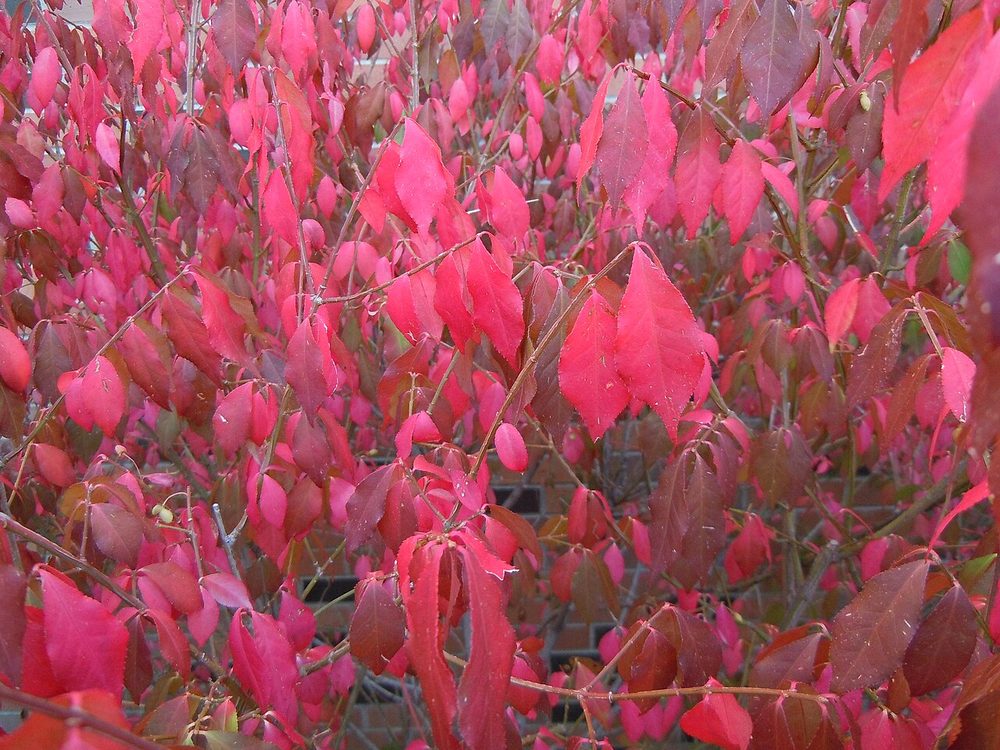
Simple, in opposite pairs directly across from each other, a key trait. Each leaf is elliptic, one to two inches long, tapering to a point with fine sharp teeth. Dark green in summer, turning brilliant crimson to purplish-red in fall.
Stems: the signature trait
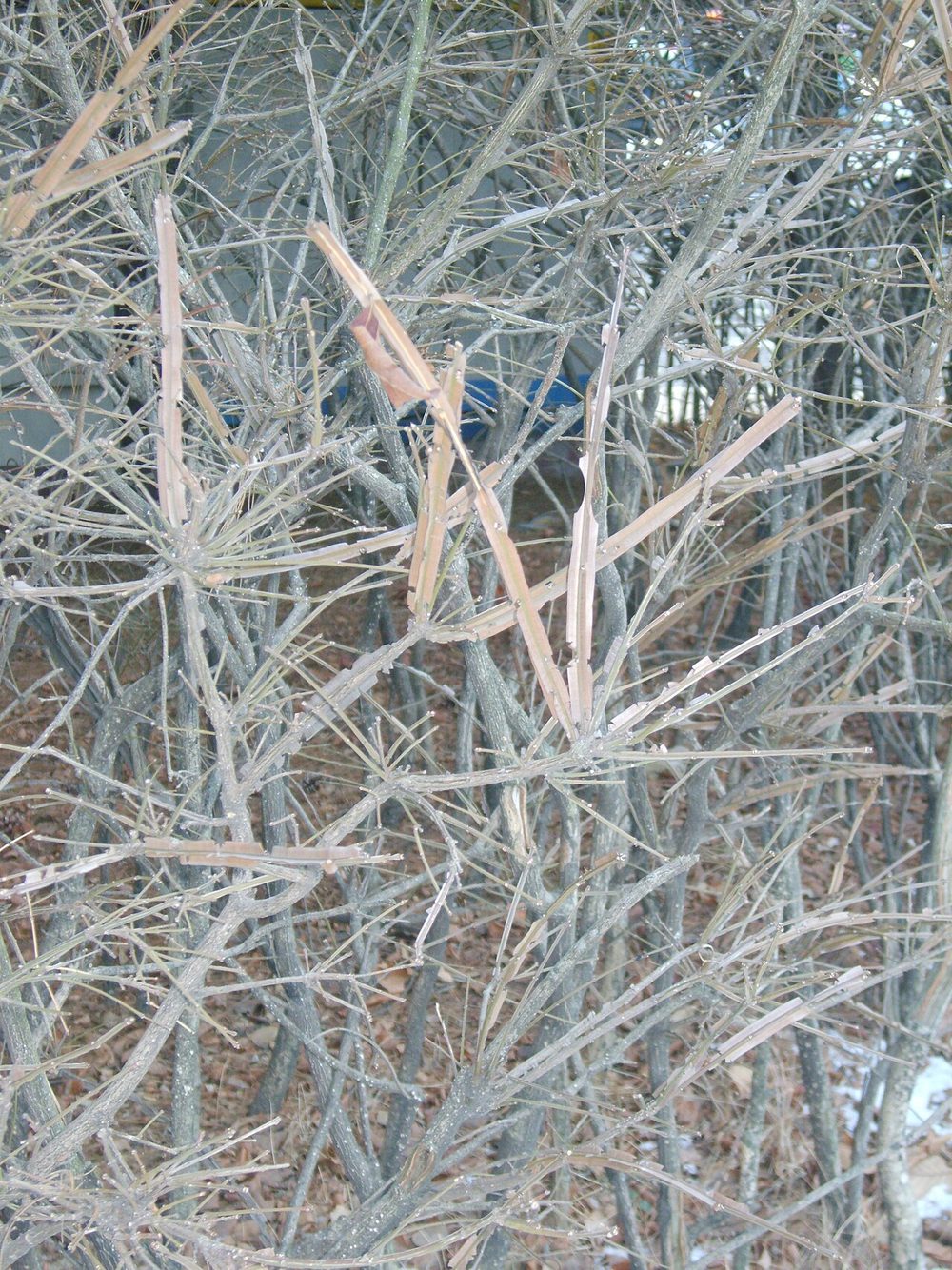
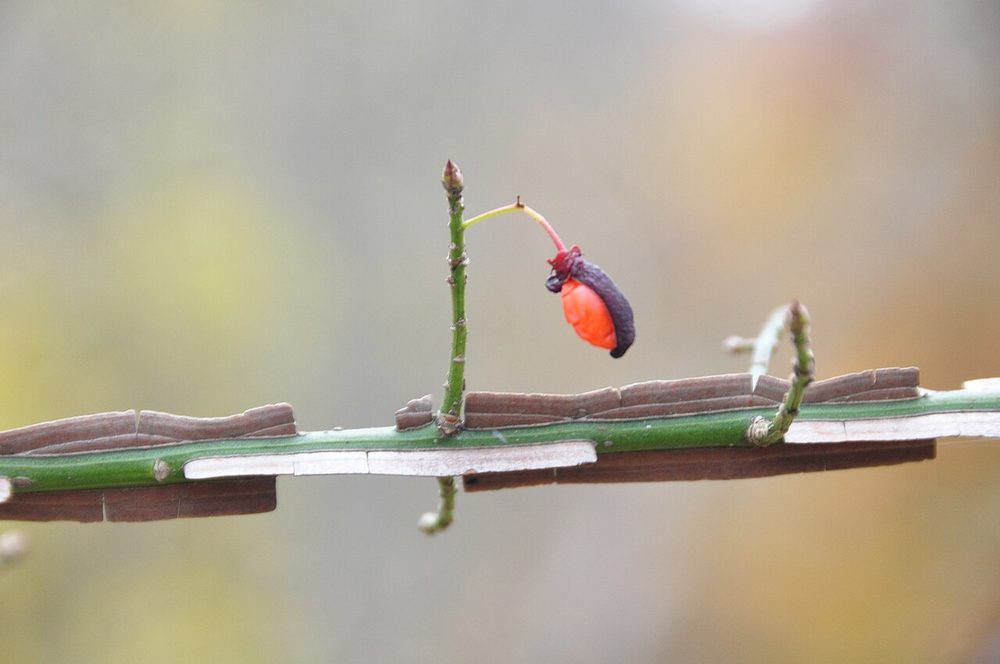
Young green stems carry two to four flat, corky, tan wings running lengthwise, which is where "winged euonymus" comes from. Be careful: the wings can be reduced to low ridges or absent on shaded plants, so don't rely on wings alone. Older bark is gray to brownish-gray and fissured.
Flowers and fruit
Flowers are inconspicuous: small, greenish-yellow, four-petaled, lying flat against the leaves, late April to June. Reddish-purple capsules appear September to October and split open to show orange fleshy seeds, a distinctive fall look.
Through the year
- Spring
- Pale greenish-yellow flowers, easy to miss; opposite leaves emerge.
- Summer
- Dense dark-green canopy; corky wings visible on young stems.
- Fall
- Leaves turn brilliant red-purple; capsules split to show orange arils. Peak ID season.
- Winter
- Bare gray ridged stems; corky wings persist on younger wood.
Don't confuse it with: native highbush blueberry
UMass Extension specifically warns that highbush blueberry (Vaccinium corymbosum, native) and burning bush both flash spectacular red fall foliage at the same time and are commonly mixed up.
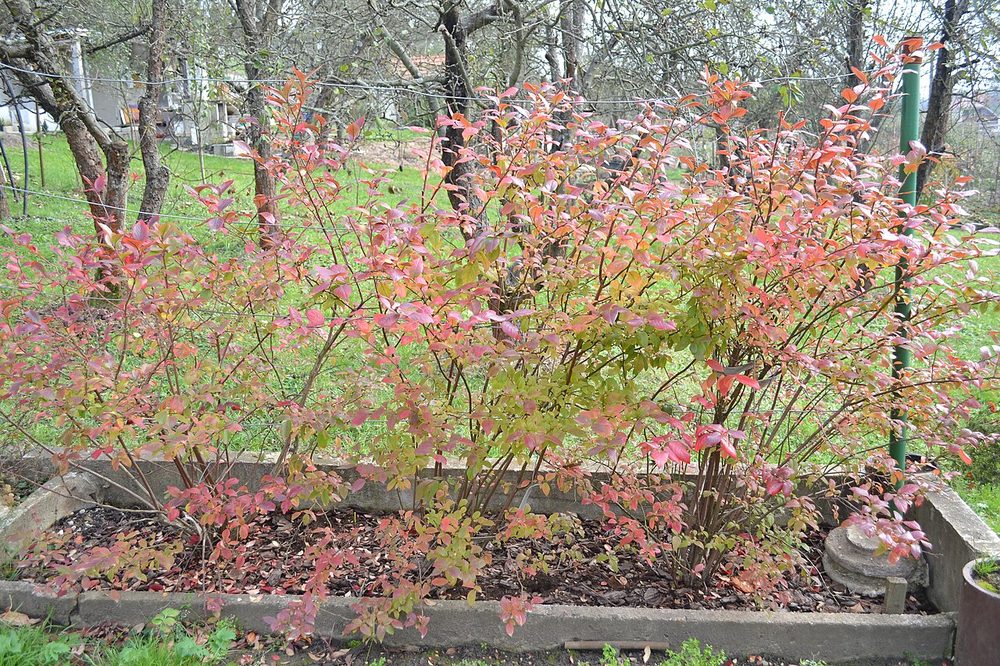

| Feature | Burning bush | Highbush blueberry (native) |
|---|---|---|
| Leaf arrangement | Opposite pairs | Alternate |
| Stem wings | Corky wings on young stems | None |
| Fruit | Reddish capsules splitting to orange arils (not edible) | Edible blue berries |
| Fall color | Solid crimson to purple-red | Red, often mixed with yellow and orange |
| Bark | Gray, ridged | Yellow-green to reddish, peeling on older stems |
Removing it
- Hand-pull seedlings and small saplings when soil is moist; get the root.
- Dig out larger shrubs with a spade, removing the entire root crown to prevent resprouting.
- Bag or burn fruiting branches. Birds spread the seed widely, so no plant with capsules should be left to drop seed.
- Cutting alone is not enough: it resprouts from the base. Follow up by grubbing the crown or repeat-cutting.
- Monitor for 3 to 5 years and replant promptly with a native to deny the site to seedlings.
Plant these instead
Replace burning bush's red fall color and adaptable, dense form:
| Native alternative | Replaces | Notes |
|---|---|---|
| Highbush blueberry (Vaccinium corymbosum) | Red fall color, edible berries | Moist acidic soil; multi-season interest |
| Red chokeberry (Aronia arbutifolia) | Red fall color, berries | 'Brilliantissima' equals burning bush for color |
| American highbush-cranberry (Viburnum opulus var. americanum) | Large shrub, fall color, wildlife | Buy clearly labeled American stock; avoid the invasive European V. opulus |
| Arrowwood viburnum (Viburnum dentatum) | Adaptable screening shrub | White flowers, blue berries; very adaptable |
Garlic Mustard
Alliaria petiolata · Mustard family



How to identify it
The tell: garlic odor
Crush any part of the plant. A strong garlic smell is the single most reliable field test, and none of the native lookalikes have it. The scent fades toward fall, so test in spring or summer.
First-year plant (rosette)
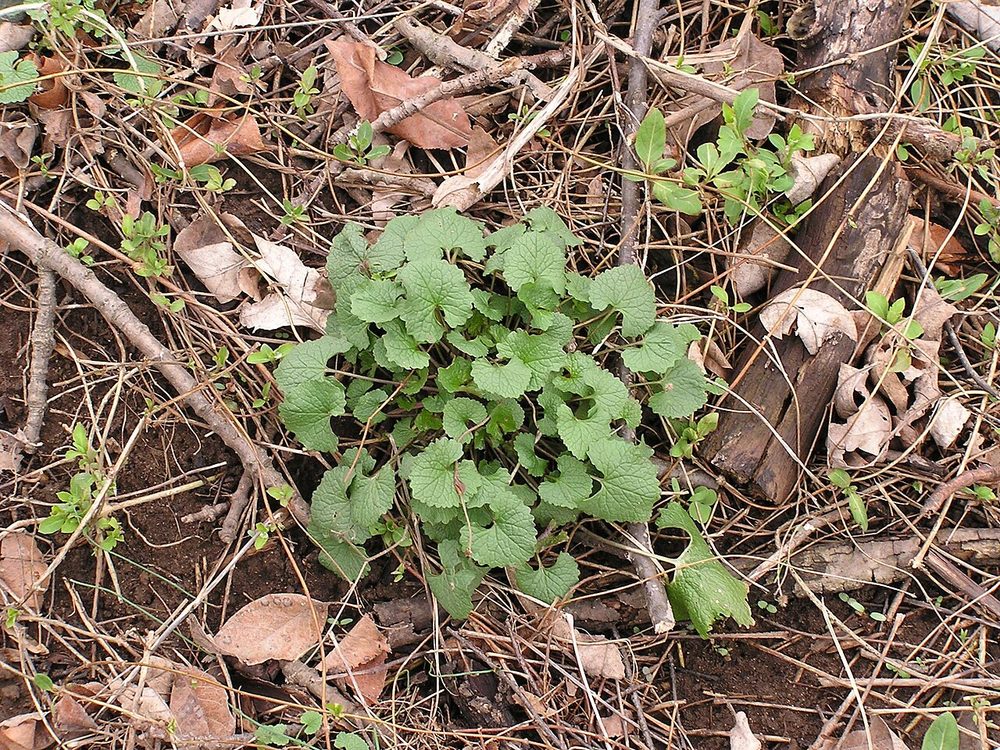
A low basal rosette of three to eight round to kidney-shaped leaves, one to four inches across, with scalloped edges and a wrinkled look. The rosettes stay green all winter, a key off-season clue.
Second-year plant
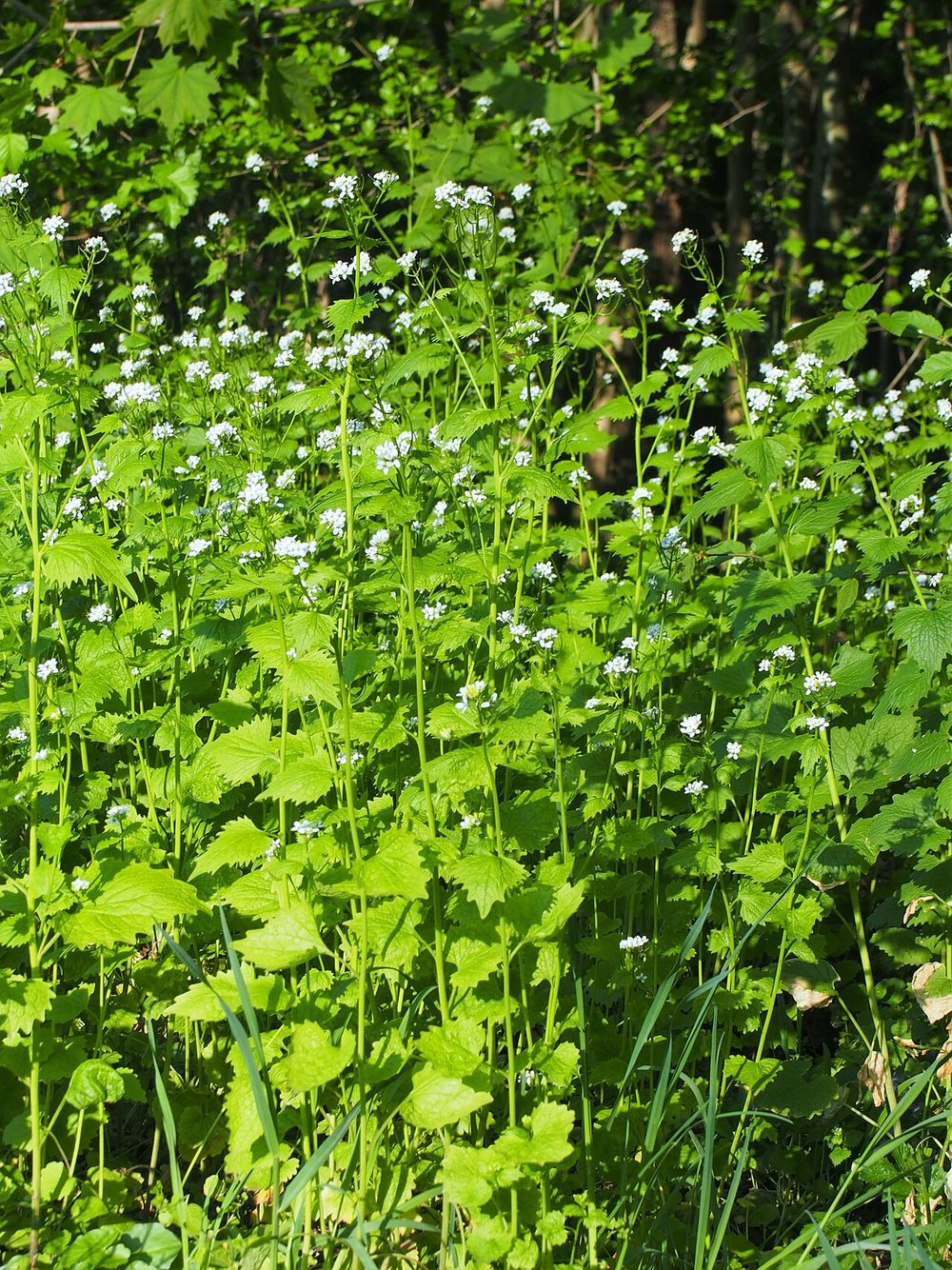
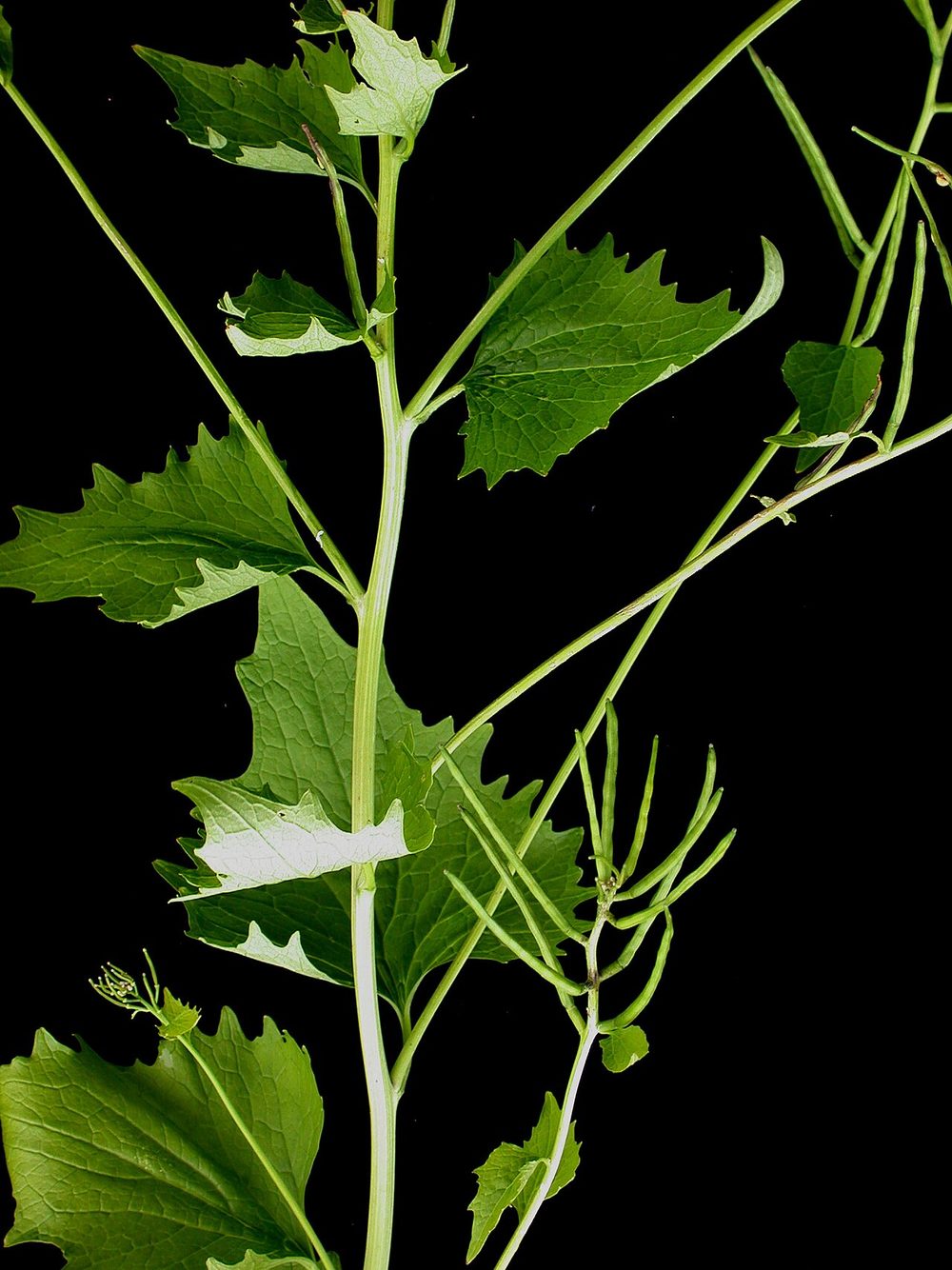
Bolts into an upright flowering stalk one to four feet tall. Stem leaves are alternate, heart-shaped to triangular, coarsely toothed, largest at the bottom. White four-petaled flowers bloom April to June, followed by long narrow four-sided seed pods. Underground, a slender white taproot has a distinctive S-shaped bend just below the crown, useful for confirming rosettes when the garlic scent is weak.
Through the year
- Spring
- Overwintering rosettes green up early; second-year plants bolt and flower white.
- Early summer
- Seed pods form and elongate; plants begin to die.
- Late summer
- Dead brown stalks with upright pods persist and shed seed.
- Fall
- New first-year rosettes appear and stay green through winter.
Don't confuse it with: native violets and toothworts
First-year rosettes resemble several native spring woodland plants. The garlic smell is the decider: none of the natives smell like garlic.
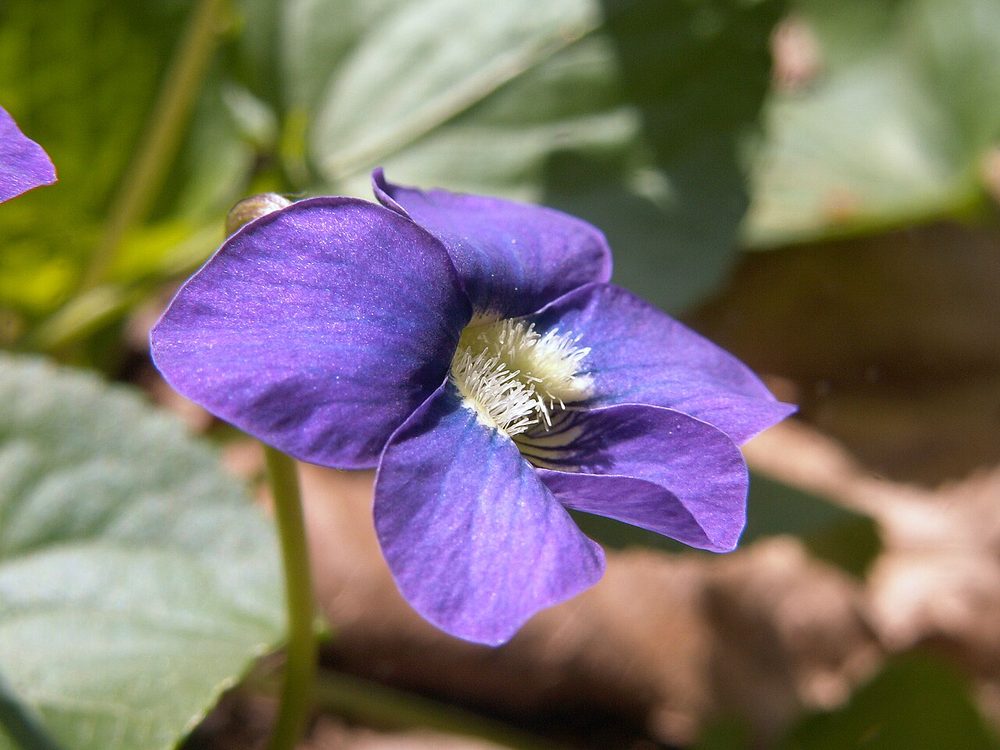

| Feature | Garlic mustard | Native violets | Native toothworts |
|---|---|---|---|
| Smell when crushed | Strong garlic | None | None or peppery |
| First-year leaf | Kidney-shaped, scalloped, wrinkled | Heart-shaped, smooth | Deeply cut or compound |
| Flowers | White, 4 petals | Violet-blue, 5 petals | White to pink, 4 petals |
| Root | White taproot with S-curve | Fibrous or small tubers | Slender, often with bulblets |
Removing it
- Pull at the right time: late April to mid-May, after stalks appear but before seeds form. This hits current plants and prevents next year's seed at once.
- Pull correctly: grab at the base and pull firmly to remove the whole taproot; it comes easily in damp soil.
- No pods yet? Pile pulled plants on site, roots up, and cover with plastic to decompose.
- Flowers or pods present? Bag and remove. Pulled plants can still finish maturing and drop viable seed. Never compost.
- Expect a long campaign: seeds stay viable 5+ years, so plan on repeated pulling and monitoring for at least 5 years. One pass will not work.
- Don't walk seed around: clean boots, tools, and clothing before leaving an infested site.
Plant these instead
Replace garlic mustard's role as a shade-tolerant woodland groundcover with natives that won't take over:
| Native alternative | Role | Light |
|---|---|---|
| Wild ginger (Asarum canadense) | Low shaded groundcover carpet | Shade |
| Foamflower (Tiarella cordifolia) | Groundcover, frothy white spring flowers | Part to full shade |
| Christmas fern (Polystichum acrostichoides) | Evergreen woodland groundcover | Shade |
| Pennsylvania sedge (Carex pensylvanica) | Soft groundcover / lawn alternative | Part shade |
Japanese Knotweed
Reynoutria japonica · Buckwheat family
.jpg)
.jpg)


How to identify it
Stems: the signature trait
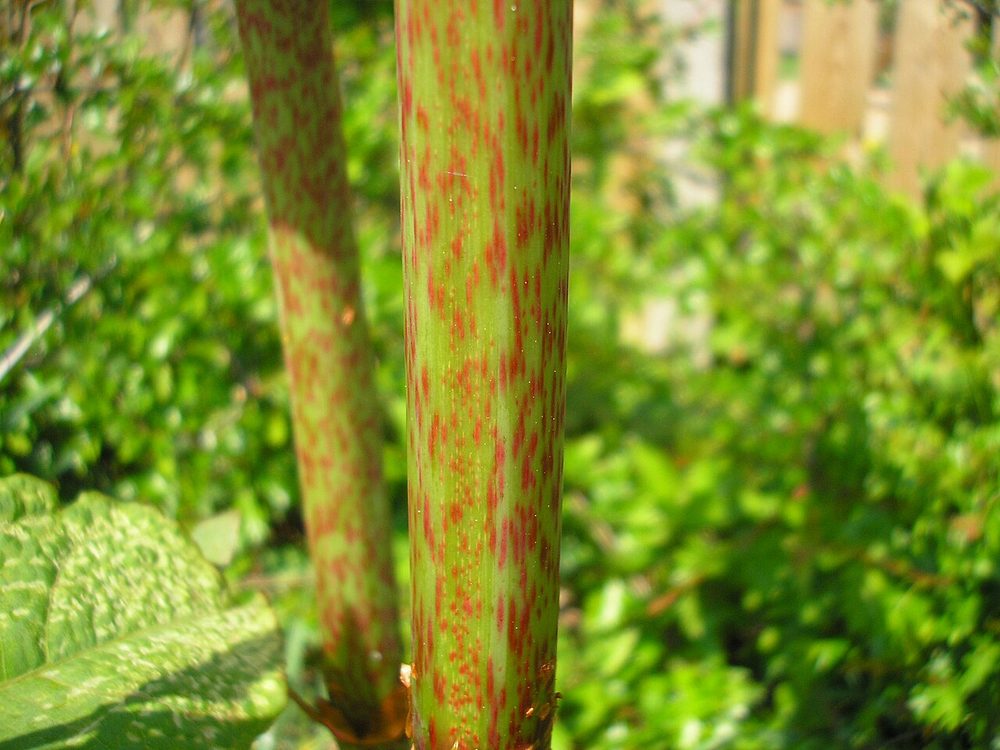
Hollow, bamboo-like canes, stout and green, often mottled with purple, with prominent swollen joints where the leaves emerge. Slice one open and it is hollow and chambered inside. Canes reach six to ten feet or more in a single season, and last year's dead canes stand through winter.
Leaves and shoots
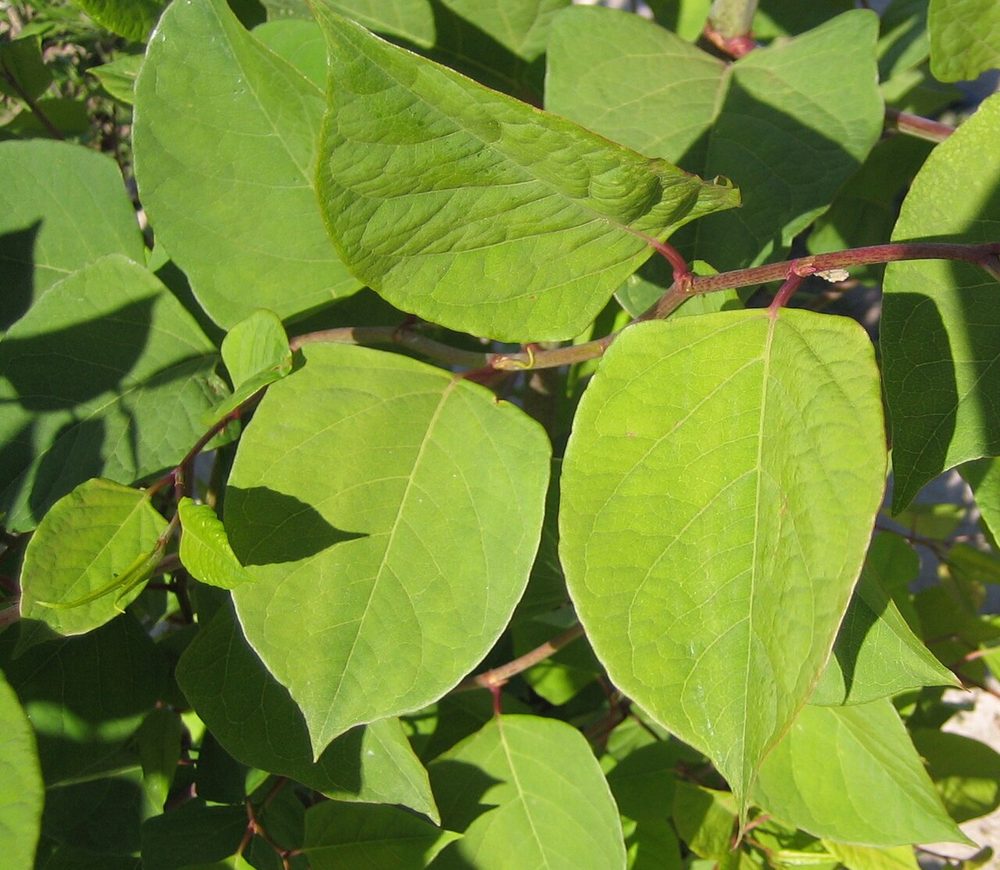
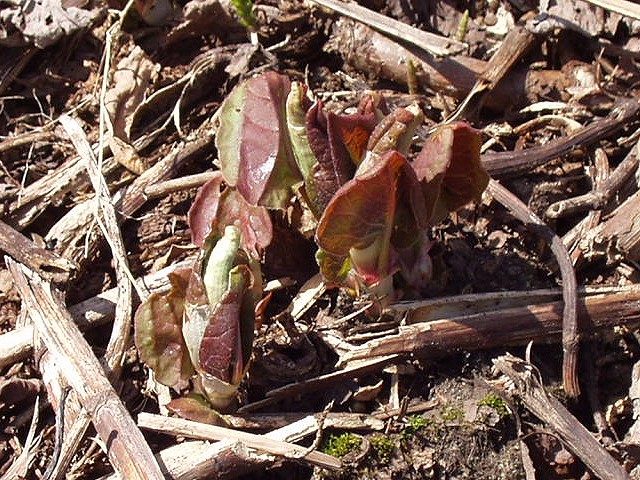
Leaves are alternate, broadly oval to heart-shaped with a flat squared base and pointed tip, three to six inches long. Early spring growth is young reddish, asparagus-like spears from the overwintering rhizomes.
Flowers and roots
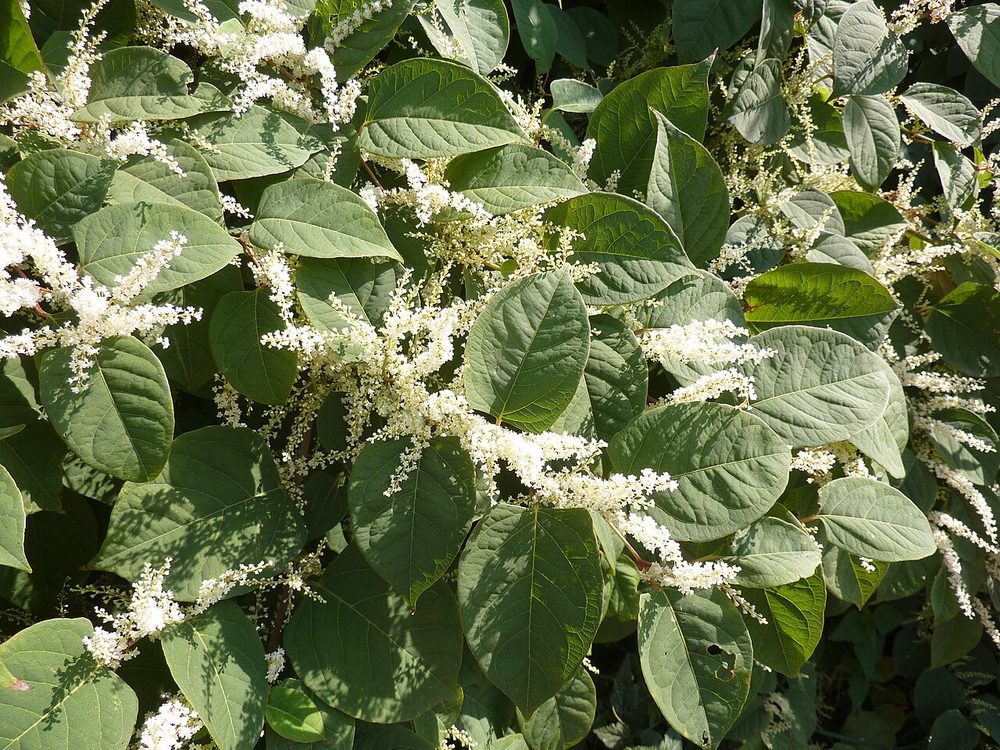
Showy sprays of small creamy-white flowers appear in elongated clusters at the branch tips in late summer. Below ground is an extensive rhizome network with a large central root mass, orange inside when cut. This is what makes knotweed so hard to kill: any fragment with a node or root piece can start a new plant.
Through the year
- Spring
- Reddish spear-like shoots emerge from rhizomes, growing rapidly.
- Summer
- Tall bamboo-like canes with lush leaves form dense thickets.
- Late summer
- Showy white flower sprays bloom.
- Winter
- Dead brown canes stand all winter: distinctive skeleton, easiest time to map the full extent.
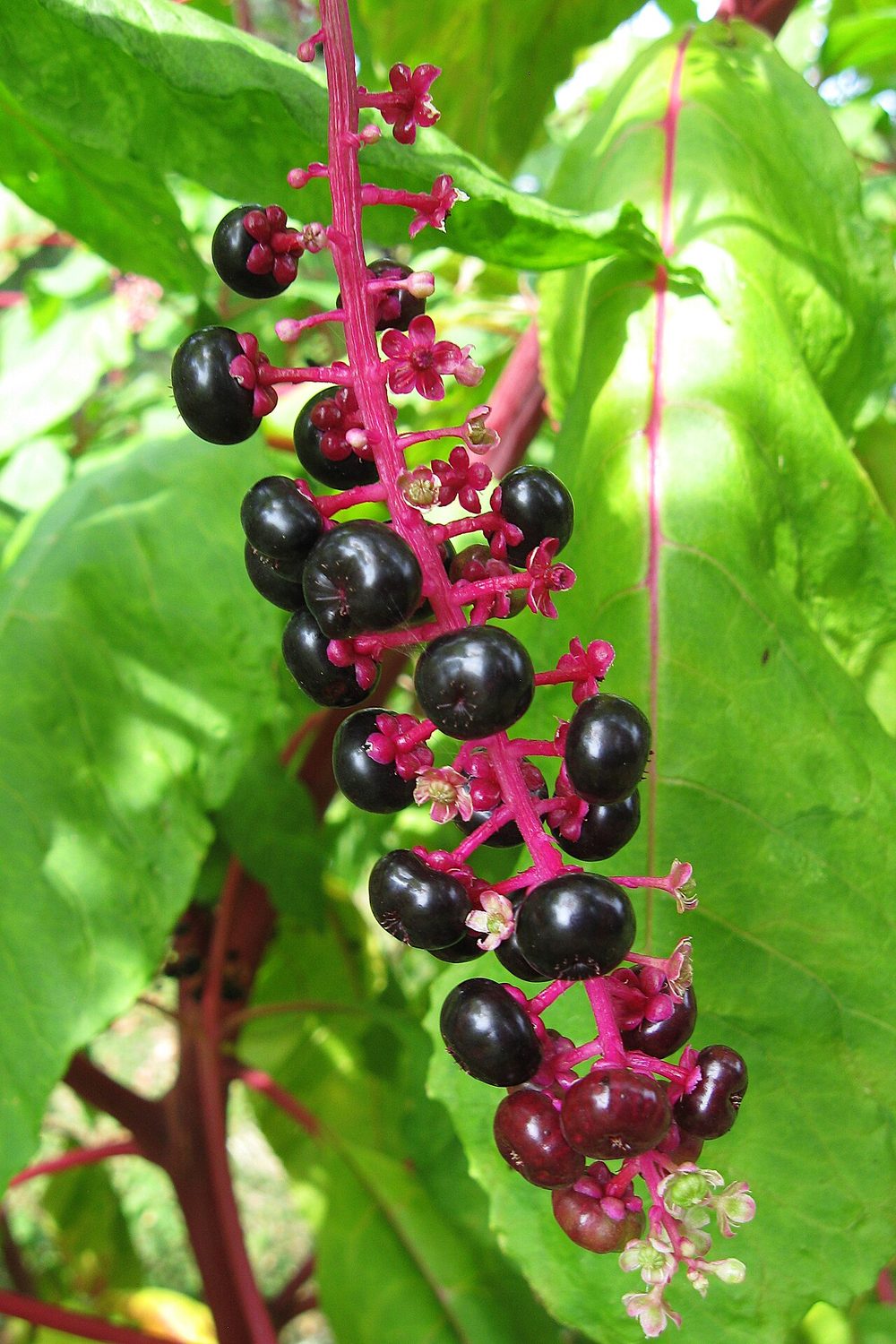
Don't confuse it with: native pokeweed
Both are tall plants with reddish stems that look imposing in late summer, but the internal and structural differences are obvious.

| Feature | Japanese knotweed | Pokeweed (native) |
|---|---|---|
| Stem interior | Hollow, chambered (bamboo-like) | Solid, soft, pithy |
| Stem joints | Prominent swollen nodes | Smooth, no swollen nodes |
| Fruit | Small papery winged seeds | Drooping dark purple-black berries on magenta stems |
| Spread | Rhizomes and fragments | Self-seeding from a taproot |
Note: pokeweed berries and all parts of the mature plant are toxic to humans; handle with gloves. Giant and Bohemian knotweed look similar and are controlled the same way.
Removing it: the hardest of the four
The single most important rule: do not spread fragments. Mowing or brush-hogging without collecting every piece creates a longer, wider infestation.
- Do not mow, till, or string-trim unless you can collect and destroy 100% of the cut material. Any node or root fragment left on the ground will root.
- A few stems: carefully dig out the plant and all of the root mass, then monitor and dig out regrowth for several years.
- Cut-and-tarp: cut all stems in early June, then cover the whole stand plus a wide buffer with thick opaque plastic for at least one full growing season, often two to three years. The buffer matters: rhizomes extend well beyond the visible canes.
- Large stands: this is the one case where professional, label-directed systemic herbicide applied in late summer is often the most effective and least fragment-spreading option. Use a licensed applicator.
- Disposal: never compost. Keep cut stems on an impermeable surface or in sealed bags, away from soil and water, until fully dried and brittle-dead. Transporting live material violates NH rules.
- Near water? Use only aquatic-labeled products applied by a licensed applicator, and coordinate with your conservation commission.
- Replant after suppression: two years of suppression followed by competitive native planting is needed to hold the site. Expect a 3 to 5+ year effort.
Plant these instead
Replace knotweed's tall, dense, tough character with natives suited to stream banks, wet ditches, and difficult sites:
| Native alternative | Replaces | Notes |
|---|---|---|
| Common elderberry (Sambucus canadensis) | Tall, fast shrub, wet sites | Large white flower clusters; wildlife berries |
| Red-osier dogwood (Cornus sericea) | Streambank stabilization, screening | Red winter stems; great for wet sites |
| Buttonbush (Cephalanthus occidentalis) | Wet sites, wildlife | Round white flower balls; loves wet soil |
| Switchgrass (Panicum virgatum) | Competitive cover to resist re-invasion | Deep-rooted; proven in NRCS knotweed-replacement trials; use local-ecotype seed |
Removal Playbook
- Positively ID first using the indicators above, and the garlic-odor test for garlic mustard, so you don't harm a native lookalike.
- Time removal before seed set. For all four, killing plants before they drop seed is the highest-leverage action.
- Remove the whole plant or root crown. Barberry, burning bush, and garlic mustard resprout from roots; knotweed regrows from any fragment.
- Never compost invasive material with seeds, roots, or rhizomes. Bag and landfill, or burn where legal.
- Clean gear between sites: boots, tools, and mower decks carry seed and fragments.
- Plan for 3 to 5+ years of follow-up. Every species here has a persistent seed bank or resprouting root system.
- Replant the cleared area immediately with a native. Bare soil invites re-invasion.
- Use herbicide only as a last resort, label-directed, ideally by a licensed applicator, especially for large knotweed or barberry stands.
- Report large or streamside knotweed to your conservation commission or UNH Extension; these are priorities for coordinated control.
Native Alternatives by Job
| You want… | Native plants to use |
|---|---|
| Compact shrub / purple foliage | Atlantic ninebark, fragrant sumac |
| Red fall color | Highbush blueberry, red chokeberry, highbush-cranberry, staghorn sumac |
| Red winter berries / wet sites | Winterberry |
| Evergreen structure | Inkberry, northern bayberry |
| Fragrance / pollinators / shade | Sweet pepperbush, Virginia sweetspire (non-native, non-invasive) |
| Shaded woodland groundcover | Wild ginger, foamflower, Christmas fern, Pennsylvania sedge |
| Tall screening / streambank / tough sites | Common elderberry, red-osier dogwood, buttonbush, switchgrass |
For the full lists, see UNH Native Shrubs of New Hampshire and the Native Plant Trust Plant Finder.
Confirm before you cut
Use these authoritative image libraries to confirm any ID before removal: the Invasive.org image archive (search by scientific name), NPS on Japanese barberry, NPS on garlic mustard, the UNH NH Guide to Upland Invasive Species (PDF), and Cornell Weed ID on Japanese knotweed.
Sources
UNH Extension (barberry, burning bush, garlic mustard, alternatives fact sheet, disposal guide); Native Plant Trust / Go Botany; USDA Forest Service; USDA NRCS; Invasive.org; Cornell Cooperative Extension; National Park Service; UMass Extension.